
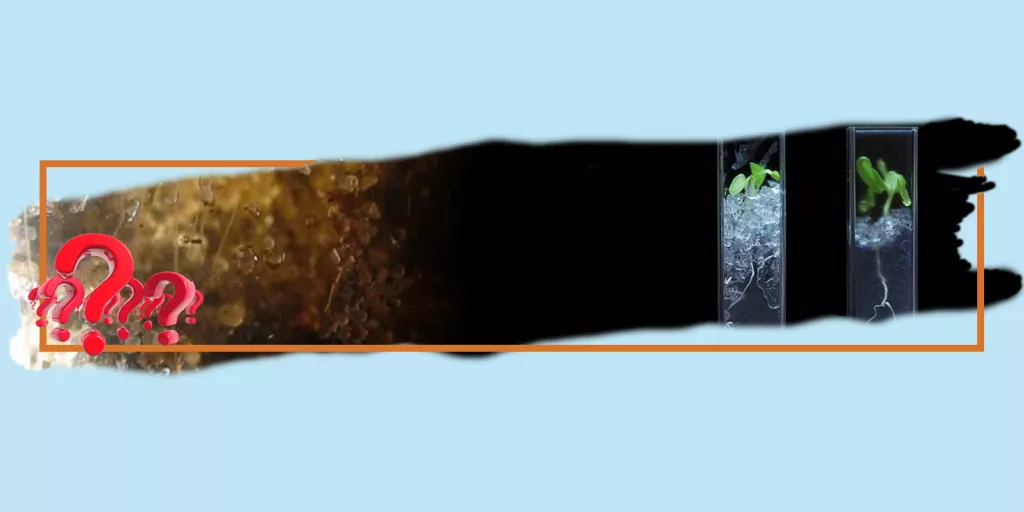
Are plant roots competing with our hydro absorbant polymers for the same water?
The hydroabsorbant polymers in the TerraCottem mixtures were chosen for, amongst other things, their ability to absorb, retain and ultimately make water available to plant roots. The hydrogels contained in TerraCottem have absorption tensions which allow plant roots to pick up the water on demand.
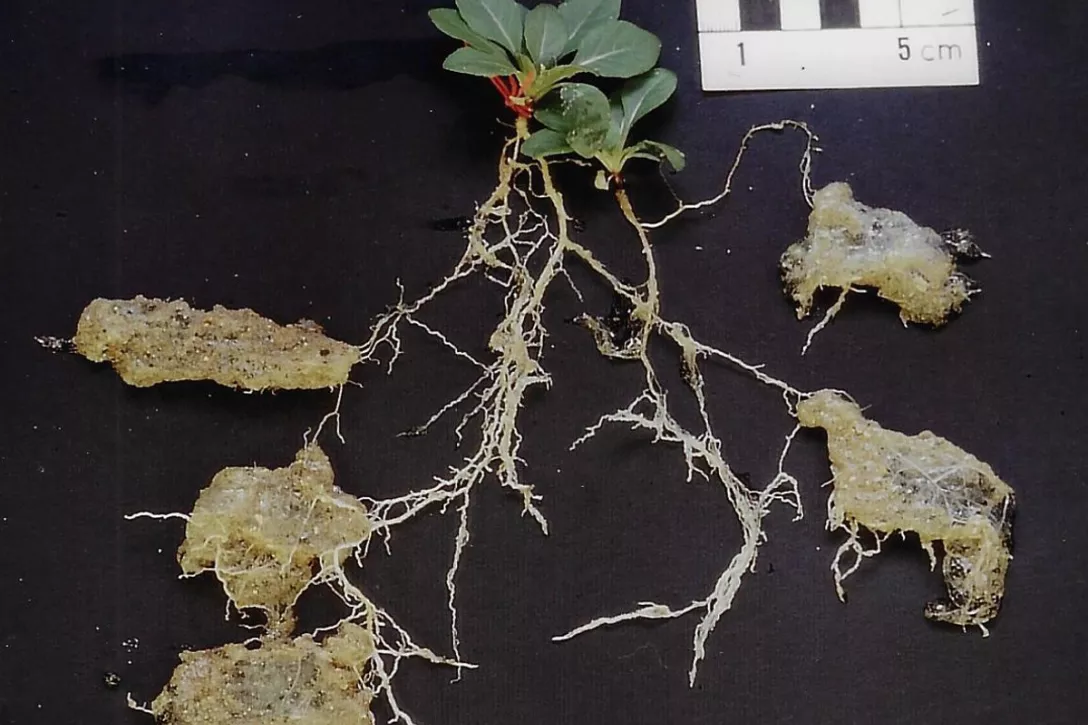
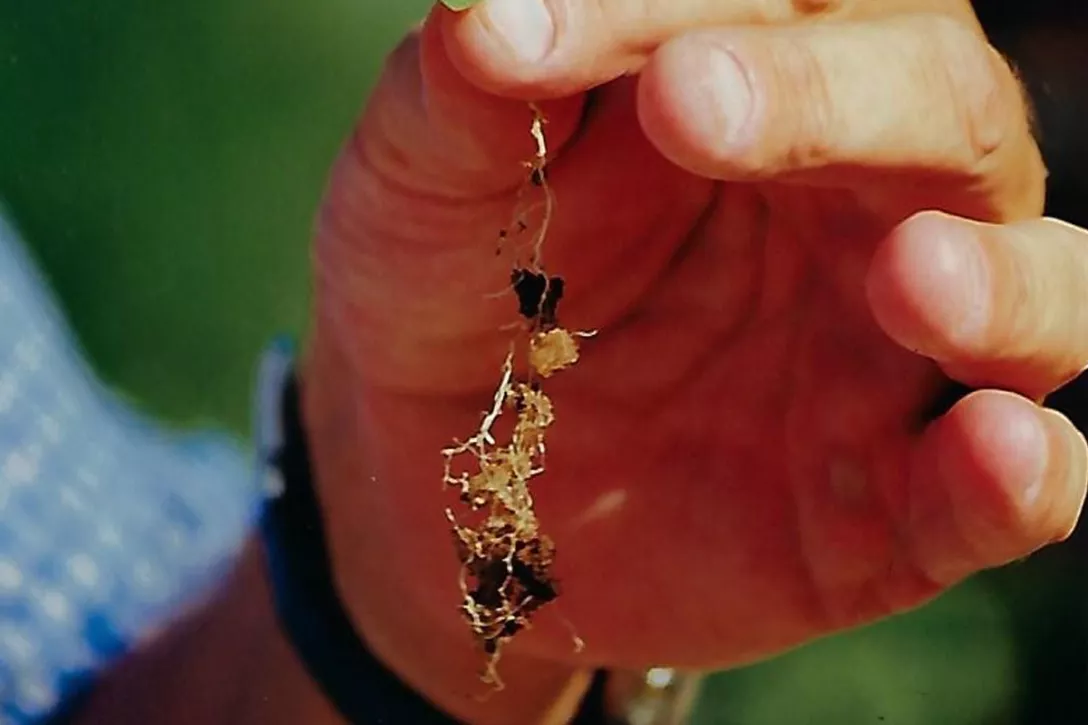
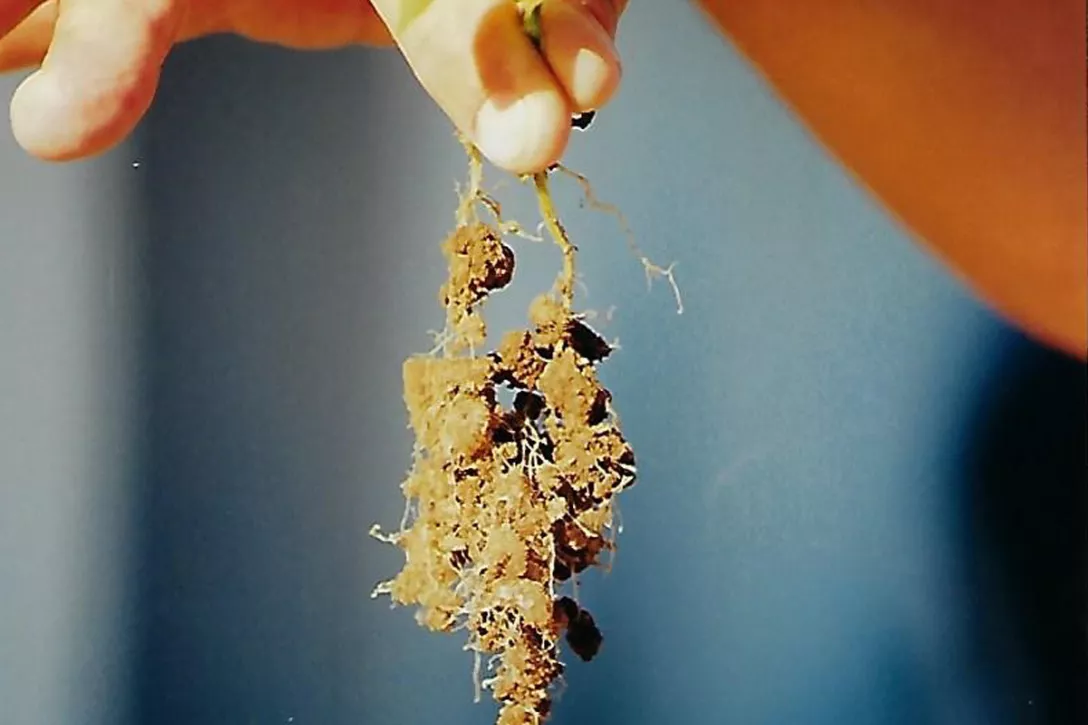
The rest consist of:
- growth precursors (they stimulate root and plant growth),
- fertilisers and
- mineral carrier material.
Water is held in the soil with varying "suction" forces
The relationship between the water content in the soil and the “force” with which the water is retained can be plotted into a graph: the water retention curve (pF-curve) or soil moisture characteristic.
For further details, please check out our blog article:
The higher a soil amendment’s water retention capacity, the more plant available water?
To summarize the above-mentioned article, soil water can be divided into 3 volumes, depending on the force with which it is held by the soil matrix:
- Some of the water will drain away due to gravity. This happens at suction forces LOWER than "field capacity". This water is not available for the plants.
- Some of the water is too strongly bound by the soil matrix. This happens at suction forces HIGHER than "wilting point". This water is also unavailable for the plants.
- The plant available water is that volume of water between "field capacity" and "wilting point":
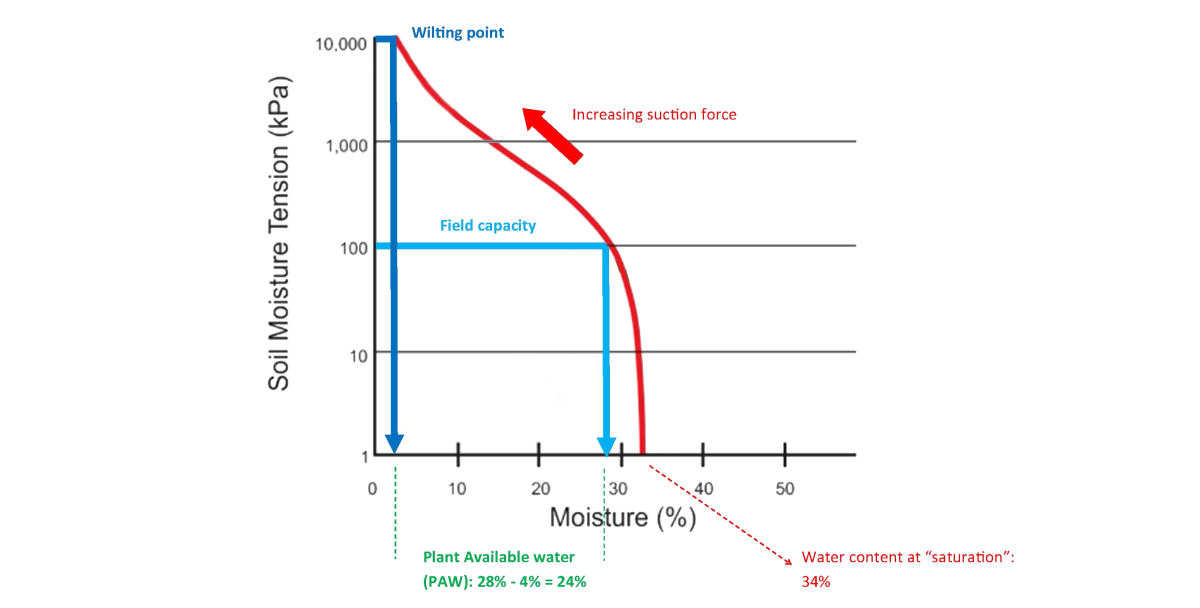
The plant available water varies according to soil texture and can be increased by adding TerraCottem soil conditioners.
Laboratory analysis
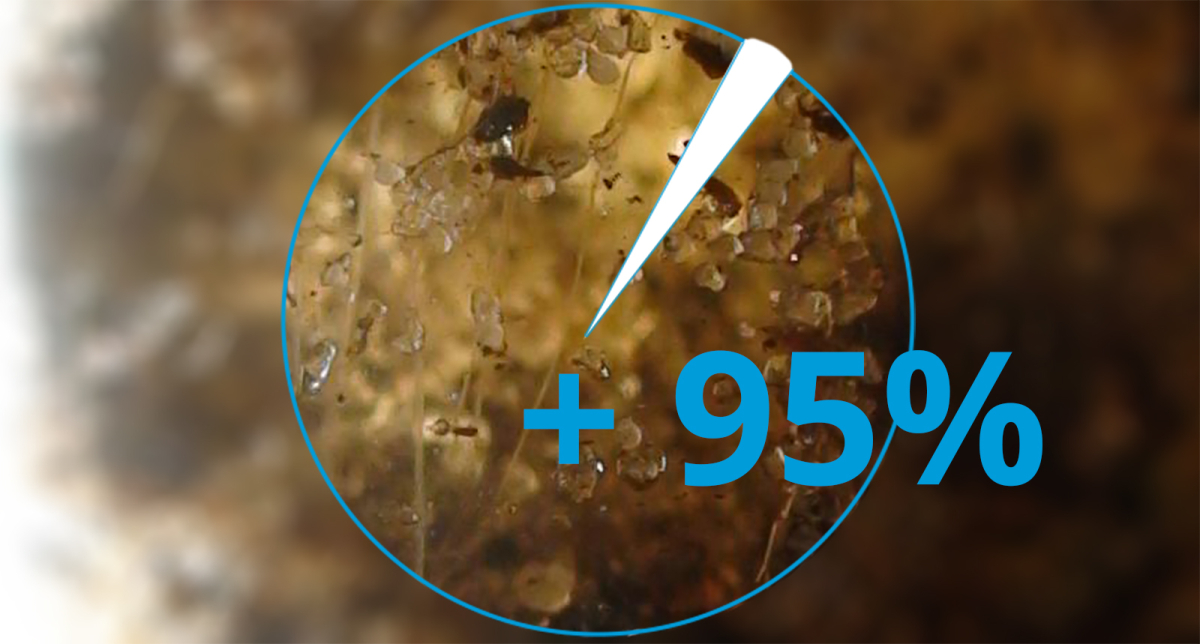
Independent analyses done at the University of Ghent, Belgium confirm that the polymers incorporated into the TerraCottem soil conditioners make more than 95% of the water retained by the polymers is plant available. This means that the water is absorbed with a force greater than gravity (limiting water losses to the subsoil) yet lower than wilting point, allowing plant roots to pick up the water on demand.
If you know someone who would also like to read this article, feel free to share:
Take me back to the Frequently Asked Questions